Cart
0
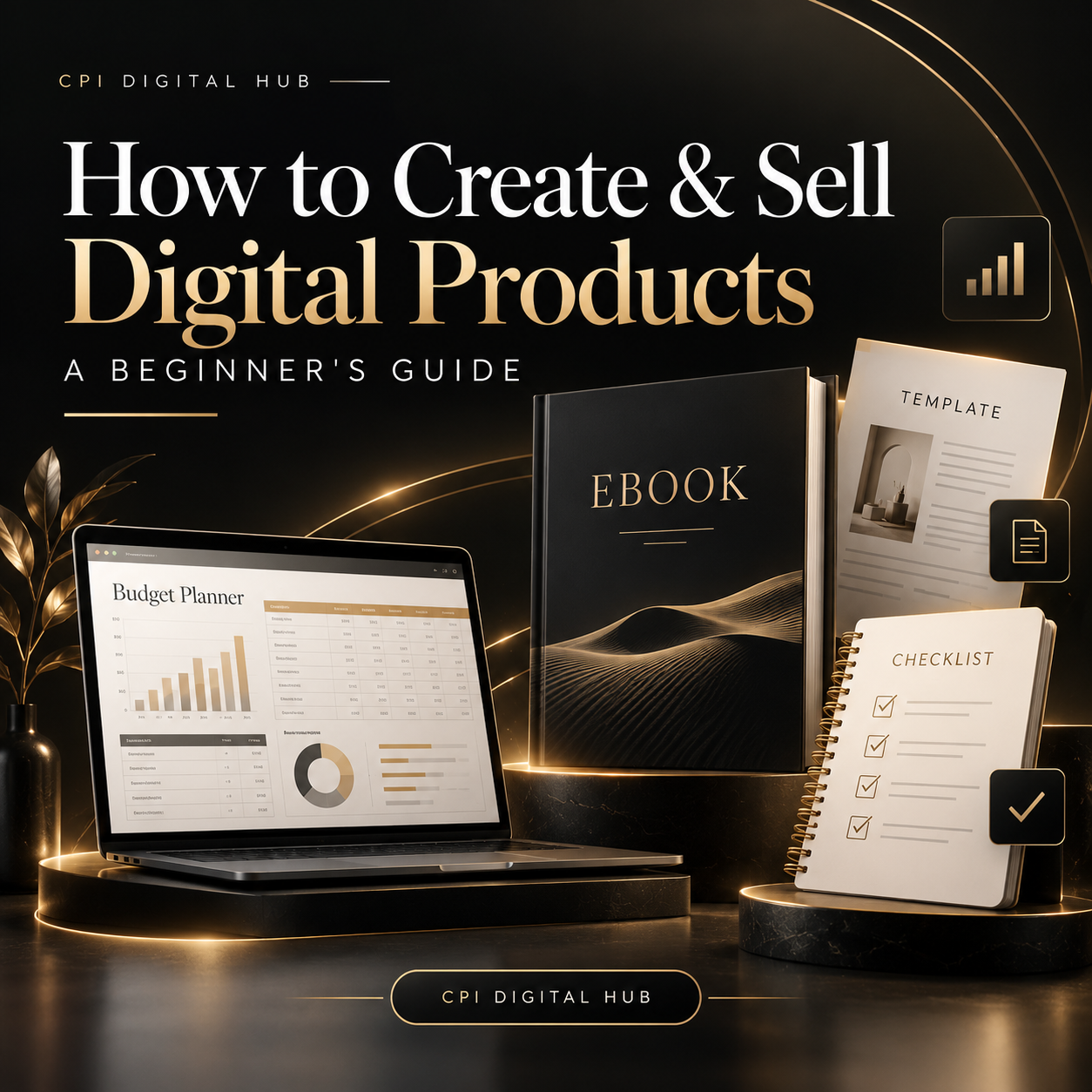
The digital economy has opened new opportunities for individuals, creators, and entrepreneurs to share their knowledge, organize useful information, and develop products that customers can access online.
From ebooks and templates to spreadsheets, calculators, and educational guides, digital products offer a flexible way to package information and practical tools.
However, creating a successful digital product involves more than simply uploading a file and making it available for purchase. It requires understanding your audience, identifying genuine needs, developing useful content, and creating a clear customer experience.
In this guide, we'll explore the essential steps involved in planning, developing, and selling digital products.
1. Understand What Digital Products Are
Digital products are resources delivered electronically rather than as physical goods.
Customers typically access them through downloads, online platforms, or digital delivery systems.
Common examples include:
-
Ebooks and guides: Educational materials that explain concepts, strategies, or processes.
-
Templates: Pre-designed documents, planners, and frameworks that help users organize tasks.
-
Spreadsheets and calculators: Tools that support calculations, budgeting, forecasting, and analysis.
-
Workbooks: Structured exercises and worksheets that help users apply information.
-
Trackers and dashboards: Resources for monitoring activities, progress, and performance.
-
Digital courses: Learning materials delivered through videos, documents, or online lessons.
Each format serves a different purpose. Choosing the appropriate format depends on what your intended audience needs.
2. Identify a Specific Audience and Problem
Before developing a digital product, identify who it is intended to help.
A product designed for new entrepreneurs may have different features from one intended for experienced business owners.
Consider these questions:
-
Who is your target customer?
-
What challenges are they experiencing?
-
What information or tools could help address those challenges?
-
What solutions are already available?
-
How could your resource provide practical value?
For example, an individual learning to manage business expenses may benefit from an organized budgeting spreadsheet.
A content creator planning a marketing campaign may prefer an editable content calendar or campaign-planning template.
The more clearly you understand the problem, the easier it becomes to design a resource with a useful purpose.
3. Research Your Product Idea Before Creating It
Product research is an important part of the planning process.
Rather than assuming that customers need a particular resource, explore existing information about your chosen topic.
Research activities may include:
-
Examining commonly asked questions within your niche.
-
Comparing existing educational resources and tools.
-
Exploring discussions in relevant online communities.
-
Identifying recurring problems or missing features.
-
Gathering input from potential users.
Your goal is to understand customer expectations and identify opportunities to offer useful, well-organized resources.
Research can improve your planning, but it does not guarantee market demand or commercial success.
4. Choose the Right Digital Product Format
Once you've identified a specific problem, determine which digital format is best suited to addressing it.
For example:
| Customer Need | Suitable Digital Resource |
|---|---|
| Learning a new concept | Ebook or educational guide |
| Organizing recurring tasks | Template or planner |
| Evaluating financial assumptions | Spreadsheet or calculator |
| Monitoring progress | Tracker or dashboard |
| Following an implementation process | Workbook or checklist |
| Developing practical skills | Course or structured learning resource |
Selecting the right format helps you avoid unnecessary complexity.
A simple checklist may be more useful than a lengthy ebook when the customer only needs a repeatable process.
Similarly, an interactive spreadsheet may be more appropriate than a static document when calculations are essential.
5. Create a Clear and Practical Product Structure
A well-organized digital product should be easy to understand and navigate.
Before creating the final file, outline its primary sections, features, or worksheets.
For an educational guide, this might include an introduction, key concepts, practical examples, implementation steps, and a summary.
For a spreadsheet, the structure may include an instructions tab, input fields, calculated results, and a reporting dashboard.
Focus on clarity, usability, and relevance.
Avoid adding unnecessary features simply to make the product appear larger or more complicated.
Where appropriate, include instructions that help customers understand how to use the resource.
6. Test the Product Before Launching
Quality checking is especially important for digital resources.
Customers should receive a product that functions as described.
Before publishing, check:
-
File accessibility and download functionality.
-
Spelling, formatting, and content consistency.
-
Spreadsheet formulas and calculations.
-
Template customization features.
-
Document navigation and readability.
-
Software compatibility.
-
Any included instructions or supporting files.
If a product includes formulas, test different input scenarios to identify possible errors.
If it contains links, verify that they work correctly.
Clear product information and reliable files help customers understand what they are purchasing.
7. Set a Thoughtful Pricing Strategy
Digital product pricing should reflect the resource's scope, complexity, usability, and intended value.
Consider the amount of content included, the functionality provided, the intended audience, and comparable resources.
For example, a small checklist may be priced differently from a comprehensive workbook containing multiple worksheets and automated calculations.
Bundles may also provide an option for customers who need several related resources.
When offering bundle discounts, calculate savings using actual individual product prices rather than inflated reference values.
Pricing should be understandable, transparent, and consistent with the product's features.
8. Build a Clear Product Listing
Your product listing plays an important role in helping customers make informed purchasing decisions.
An effective digital product page should explain what the resource does and what customers will receive.
Include a descriptive product title, a concise explanation of its purpose, relevant preview images, and accurate compatibility information.
Where applicable, clarify whether the product is editable, which software is required, and how the download will be delivered.
For example, a financial planning workbook should explain which calculations or worksheets are included instead of relying on vague promises of financial success.
Customers should be able to understand the resource before purchasing it.
9. Develop a Sustainable Marketing Approach
Creating a useful product is only one part of building a digital business.
Marketing helps potential customers discover your resources and understand how they may fit their needs.
Consider approaches such as educational blog content, search engine optimization, email newsletters, informative social media posts, and relevant product demonstrations.
A content creator selling planning templates might publish articles about organization and productivity.
Someone offering business-analysis tools could create educational content explaining how to interpret important planning metrics.
Effective marketing should communicate the product's actual features and intended uses without making unrealistic performance or earnings claims.
10. Improve Your Resources Over Time
Digital products can be updated as information changes, software evolves, and customer needs become clearer.
After launching, consider evaluating common support questions, technical issues, requests for additional functionality, and opportunities to improve documentation.
Improvements might include clearer instructions, corrected formulas, updated examples, or better file organization.
A consistent improvement process can help maintain the usefulness of your digital resources.
Explore Practical Digital Resources at CPI Digital Hub
Planning and developing digital products requires organization, research, and thoughtful implementation.
CPI Digital Hub provides digital guides, templates, calculators, workbooks, trackers, and educational resources designed to support individuals exploring business ideas, planning projects, and building practical skills.
Whether you're researching a new opportunity or organizing an existing business workflow, having suitable tools can help make your next steps easier to understand.
Explore CPI Digital Hub's collection of digital resources and discover tools designed to support learning, organization, and informed decision-making.
Explore Digital Resources at CPI Digital Hub
Disclaimer: This article is provided for general educational purposes. Business outcomes vary depending on individual circumstances, market conditions, experience, and execution. No income or business results are guaranteed.